The presence of frogs is an indicator of a pristine environment, due to their partial respiration through the skin which causes an accumulation of any toxins present, thus killing the frog.
Fifteen amphibian species are found in the area, with the highly endangered Cape Platanna (Xenopus gilli) and Micro Frog having been recorded from seasonal vleis in the Hagelkraal and Ratel River catchments.
Most of these frogs breed in water such as fynbos seeps, marshes, mountain streams, rivers, coastal lakes and pans. Only three species do not depend on wetland habitats:
The Sand Rain Frog occurring in flat sandy areas;
The Cape Mountain Rain Frog and Strawberry Rain Frog, both depending on montane habitats.
Rain frogs have squat rounded bodies, flat faces and short stumpy limbs, spending most of their lives underground and breeding after rain when the ground is moist.
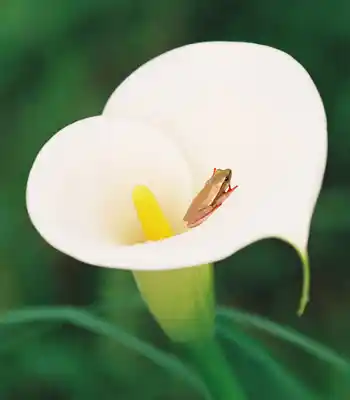
The Arum Lily Frog (Hyperolius horstockii) sometimes hides inside the white Arum Lily flower in the daytime, using cryptic coloration to blend in with the blossom, while at night creeping down the stem to hunt insects.